How long does it take to crochet a blanket?
5 min read By David from TimeRetain
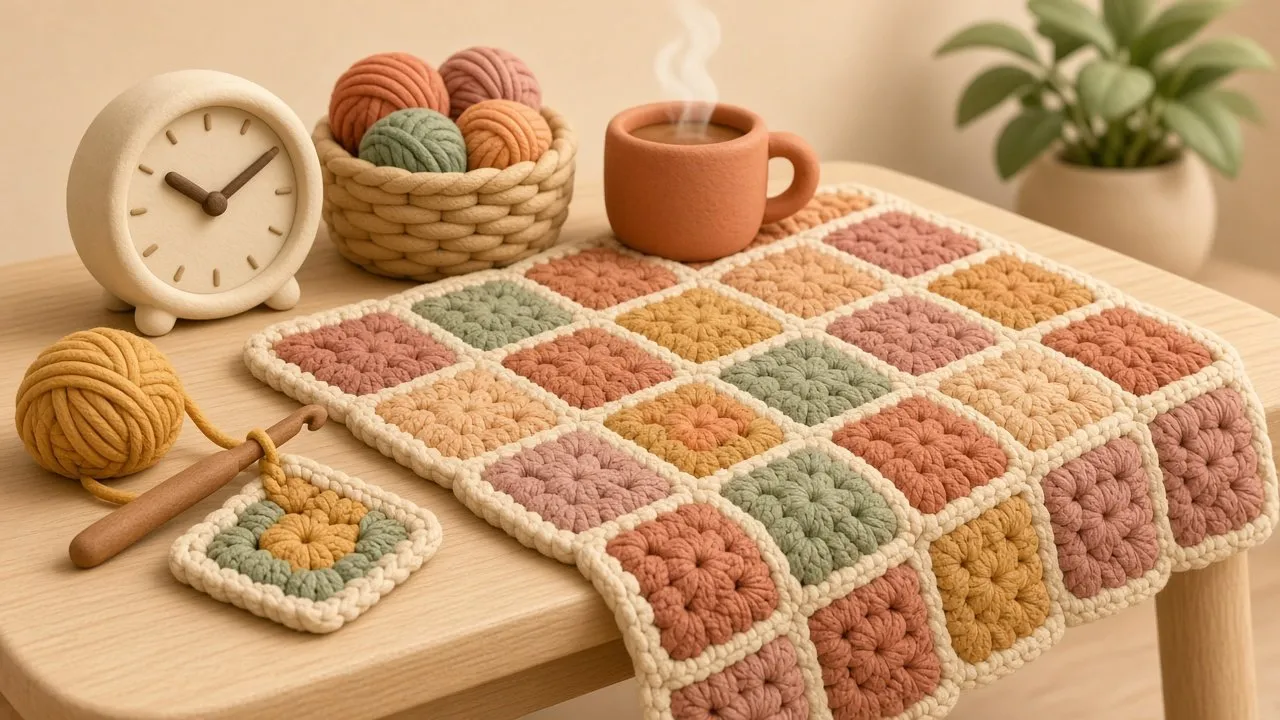
A crochet blanket can take anything from a few evenings to many months. In one Ribblr forum thread, a crocheter says they’ve made blankets that “took a couple of days and some that took several months.” The size, the yarn, the stitch, and your own pace explain most of the difference.
A general answer won’t tell you much about your blanket. Your own answer takes an evening or two to get: crochet a few squares or rows, time them, and multiply.
Why the answers are so far apart
Four things set the time.
- Size. A 50 by 60 inch throw has more than twice the area of a 36-inch square baby blanket. A twin bed blanket roughly doubles the throw again.
- Yarn and hook. Thicker yarn on a bigger hook covers each inch with fewer stitches.
- Stitch. Tall stitches like double crochet grow faster than single crochet. Textured stitches, color changes, and motifs slow you down.
- You. Your speed, and how many evenings a week you actually pick up the hook.
Then there’s the part that’s easy to forget: joining squares, the border, and weaving in ends. On a blanket made of squares, finishing can add many hours. In the example below, it adds about 17.
Estimate your own blanket
Pick one repeating piece of the blanket. That’s a square for a granny square blanket, or one row for a blanket worked in rows. Then work through these lines.
- Repeating piece (square or row):
- Minutes per piece:
- Pieces in the blanket:
- Joining:
- Border:
- Weaving in ends:
- Total minutes:
- Minutes I crochet in a usual week:
- Weeks to finish:
Repeating piece (square or row):
Minutes per piece:
Pieces in the blanket:
Joining:
Border:
Weaving in ends:
Total minutes:
Minutes I crochet in a usual week:
Weeks to finish:
Time two or three pieces, not one. The first one is often slower while you learn the pattern, so lean on the later times.
For a blanket in rows, count the rows from your swatch. If 4 inches of fabric has 10 rows, a 60-inch blanket needs about 150. Corner-to-corner blankets are the exception, because the rows change length. Count the small blocks instead, and time a few of those.
You can’t time the joining and border before you get there. Write down a guess and mark it as a guess. When you reach them, time the first strip or round and update the line.
An example: a granny square throw
Here’s an invented example. You want a throw of about 48 by 60 inches, made from 6-inch granny squares.
That’s 8 squares across and 10 down, so 80 squares. You time three of them: 38 minutes, 33 minutes, and 31 minutes. The first was slow while you learned the pattern, so you use 32.
| Part | How you get the number | Minutes |
|---|---|---|
| Squares | 80 squares × 32 minutes | 2,560 |
| Weaving in ends | 80 squares × 4 minutes | 320 |
| Joining squares into strips | 10 strips × 24 minutes | 240 |
| Joining the strips | 9 long seams × 30 minutes | 270 |
| Border | 3 rounds × about 55 minutes | 165 |
| Total | 3,555 |
That’s a little over 59 hours. The squares are only about 72% of it. The other 17 or so hours are the parts that are easy to forget when you buy the yarn.
Now turn hours into weeks. If you crochet about 45 minutes on five evenings a week, that’s 225 minutes a week. At that pace, the whole blanket takes about 16 weeks, or roughly four months.
A twin size version of the same blanket would need 11 squares across and 15 down. That’s 165 squares, a little more than double, and the joining and border grow too.
If the blanket has a deadline
Say you want to give this throw for the holidays and it’s mid-October. Ten weeks is not sixteen weeks, and you can see that before you’ve bought all the yarn.
You have a few honest options. You can make it smaller, since a 36 by 48 inch lap blanket needs 48 squares instead of 80. You can choose thicker yarn and a bigger hook, which gives bigger squares and fewer of them. Or, if you know the person would enjoy it, you can give it unfinished with a note.
Check again after the first two weeks. At 225 minutes a week, you finish about 7 squares a week. If you’ve done 9 instead of 14, you know early. Changing the size in week three is easy. Changing it in week nine means you’ve already made squares you won’t use.
Keep the real numbers for next time
Your estimate is a guess until you finish. Keep a short note of the actual minutes as you go, like “squares 12 to 14, 95 minutes”. At the end, you’ll know what a throw takes with your hands, your yarn, and your pace.
That’s the number to use when the next blanket comes along. It’s also a good reply when someone asks if you could make one for them. A friend’s blanket of the same size might take half as long or twice as long, so compare your own projects with each other.
If you forget to time an evening, write “about 40” and mark it as an estimate. A total with a few marked estimates is still more useful than no total.
Keep your crochet time in TimeRetain
TimeRetain can hold the time side of the project. Record each session with a short note like “border, round 2”, keep the blanket’s sessions together, and see its total when it’s done. Then your next estimate starts from your real number instead of a guess.
No account is required. With Sync off, your record stays on your device. Optional Sync stores an encrypted copy on TimeRetain’s servers.

Time your next blanket session in TimeRetain.
Questions and answers
How long does it take to crochet a baby blanket?
It depends on your yarn, stitch, and pace, so time one square or one row and multiply. A 36-inch square baby blanket has a little under half the area of a 50 by 60 inch throw, so it usually needs less than half the crochet time.
Do beginners take longer to crochet a blanket?
Often, yes, and the first squares or rows are the slowest. Time a few more after you've found your rhythm and redo the estimate with those numbers.
What makes a crochet blanket faster to finish?
Thicker yarn with a bigger hook, taller stitches, fewer color changes, and a smaller size all mean fewer stitches. Each one also changes how the blanket looks and feels, so pick the change you'd actually be happy with.
Can I track my crochet time in TimeRetain?
Yes. Record each session with a short note and keep the blanket's sessions together. TimeRetain then shows the blanket's total time when you look back.