What is a reading journal? A simple way to start
Updated 5 min read By David from TimeRetain
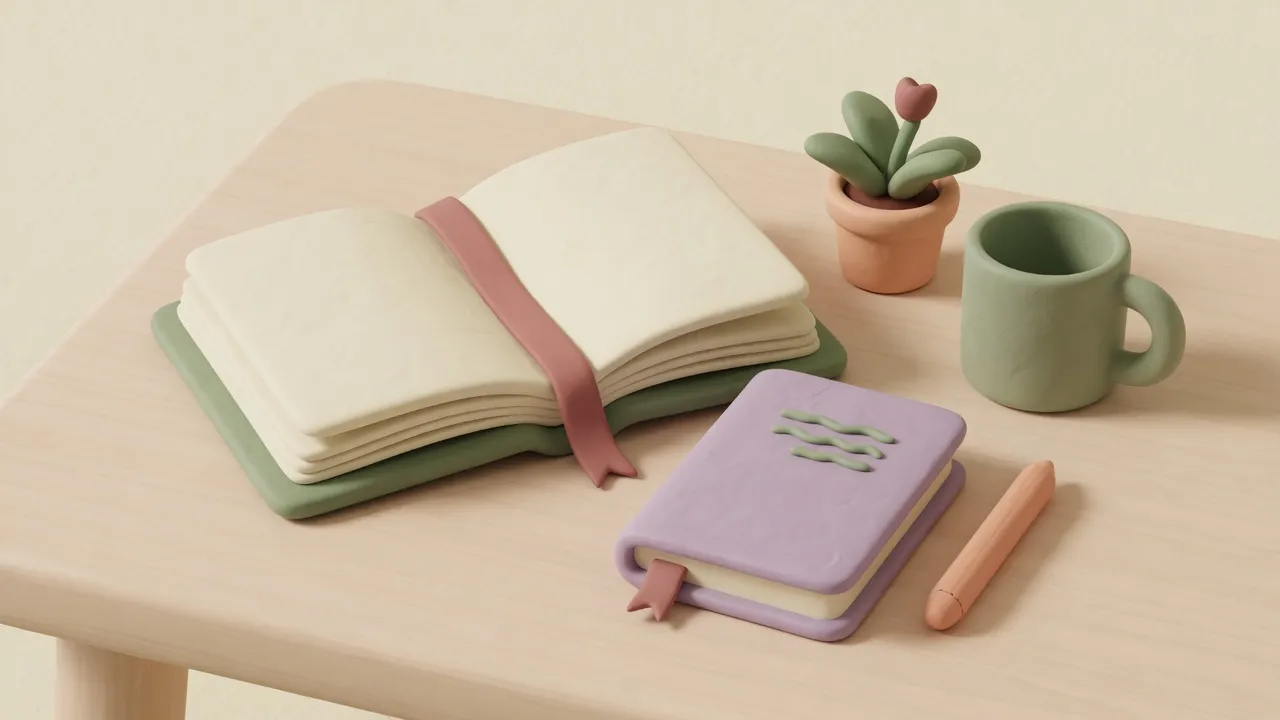
A reading journal is a personal record of what you read and your thoughts about it. You can use it for a reaction, a question, or a passage you want to return to.
- Date:
- Book and author:
- Page, chapter, or audio position:
- My note:
Date:
Book and author:
Page, chapter, or audio position:
My note:
Start with the book you are reading now. Record its title and author, the page or chapter, and one thing you want to remember. A notebook or a plain document is enough.
A list of finished books is useful when you want to find a title. Add a response when you also want to remember what interested you about it.
A reading journal example
Here is an invented entry. The book, author, and scene are fictional:
- Date:
September 23
- Book and author:
The island timetable, by Lena Marr
- Page, chapter, or audio position:
Chapter 4, the empty return crossing
- My note:
Mara takes the ferry back for one passenger after complaining that the islanders expect too much of her. I trust what she does more than what she says. Does she see herself that way?
Date: September 23
Book and author: The island timetable, by Lena Marr
Page, chapter, or audio position: Chapter 4, the empty return crossing
My note: Mara takes the ferry back for one passenger after complaining that the islanders expect too much of her. I trust what she does more than what she says. Does she see herself that way?
The entry names something that happened and the reader’s response. It leaves a question open because the reader has not finished the book.
Compare that with “Chapter 4: Mara runs the ferry.” Both notes identify the scene. The longer one also records why it caught this reader’s attention.
You don’t need a response to every chapter. Write when there’s something you want to keep, whether that’s a whole paragraph or one sentence.
Make each entry useful
If you keep one page or document per book, put the title and author at the top once. Add dated notes underneath as you read.
The “My note” field can hold a response like the ferry example, a detail you enjoyed, or a question about an argument.
For nonfiction, an entry can separate the author’s claim from your response. For example, imagine a book recommends choosing one hobby and putting the others aside:
The author recommends concentrating on one hobby. I like switching between drawing and gardening, so I am unsure whether this advice suits what I want from either.
That is an invented response, not a quotation from a book. It records a disagreement that the reader can revisit without turning it into a formal review.
Leave enough detail to find the passage again
A note such as “Loved the conversation near the end” can be hard to use later. Add a location while the book is still open.
For a print book, record the page number. If you return to a different edition, a chapter number and a few words about the scene can help too.
For an ebook, use a page or location number that your reader displays, alongside the chapter. For audio, record the chapter and playback position. Say whether the position refers to that chapter or the whole recording.
For example, record chapter 4 and a position of 12 minutes within that chapter. Add “return crossing” to identify the scene.
If you copy a sentence, put it in quotation marks and keep the location with it. Write your response separately. When you return to the note, you can tell which words belong to the author.
You can also describe the passage in your own words and record its location.
Choose the detail you will use
Add fields when you have a reason to look at them later.
If you want to recommend books to friends, note who a book brings to mind and why. If you enjoy comparing translations, include the translator and edition. If you want a record of when you read a book, add start and finish dates.
A rating is optional. “Four stars” is quick to scan, but a sentence such as “I enjoyed the conversations and lost interest during the journey” explains your response.
Keep unfinished books in the journal if you want to. Write where you stopped and whether you want to return. You can record “Stopped at chapter 6” without deciding what you think of the whole book.
If your opinion changes, date a new note beside the earlier one. For the ferry example, a later entry can explain whether Mara’s choices changed the reader’s view. The first entry still records what the reader thought before reaching that part.
Decoration can be part of the pleasure. Leave space for it if you enjoy it. A plain entry is complete too.
Keep reading time optional
A reading journal can contain no time measurements at all. The entry above works without a duration.
If you want to see how much time reading took, add session lengths or keep a separate time record. For example, 20 minutes on Monday and 35 minutes on Thursday give you 55 minutes of reading.
The total tells you how much time you spent. It says nothing about what you thought of the book; that’s what the notes are for. You don’t need to turn either into a target for next week.
A manual timer can record sessions while you read. TimeRetain keeps those sessions and their total under a short label, such as the book’s title. Keep your responses in your journal.